
How Canada's Political System Works

A federal parliamentary democracy
Ottawa · Westminster system · 10 provinces & 3 territories
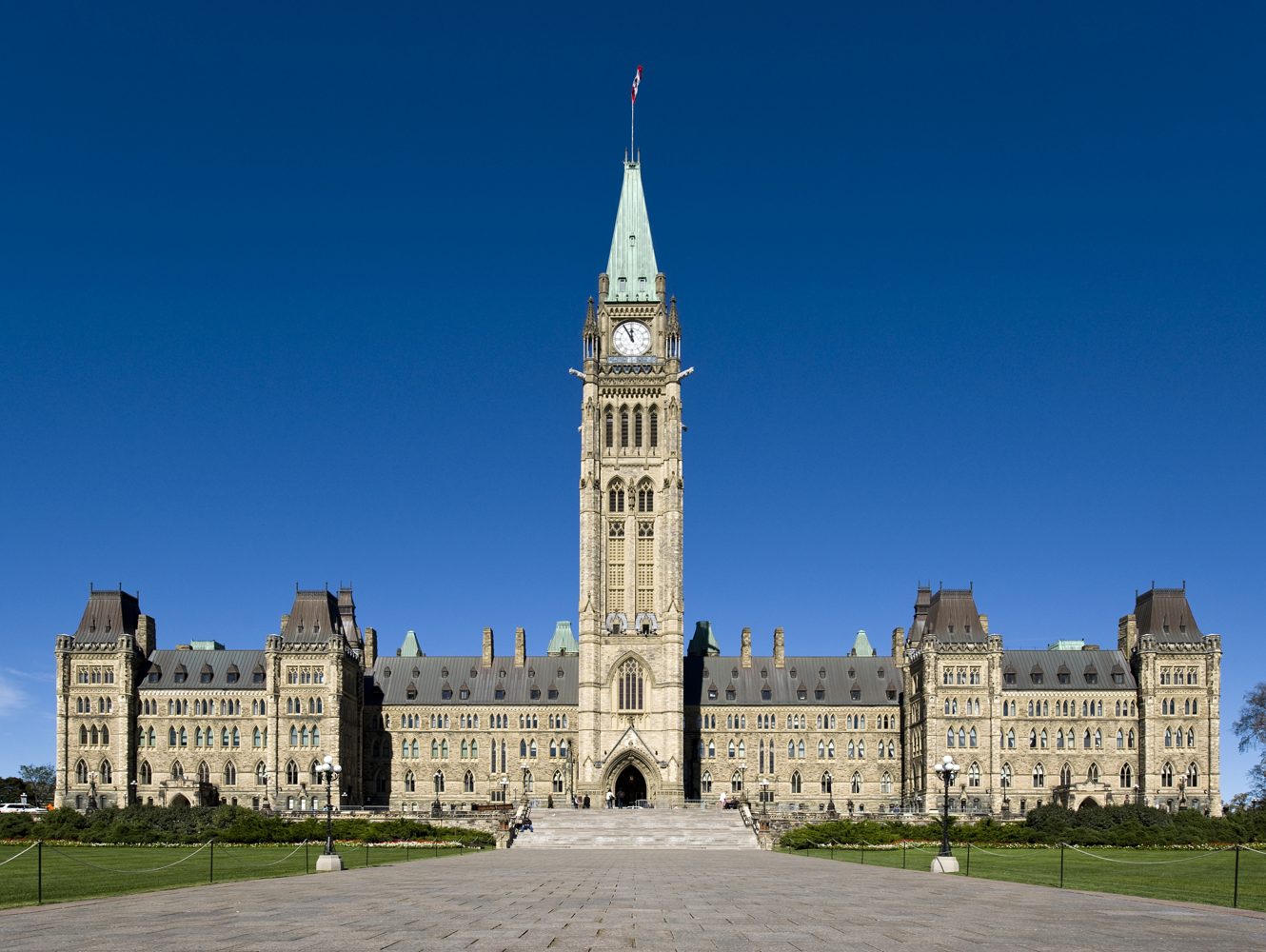
Canada is a federal parliamentary democracy using the Westminster system. Executive, legislative, and judicial powers are separated with checks and balances. The Prime Minister must maintain the confidence of Parliament to govern.
Key Feature
Federalism means power is divided between the federal government and ten provinces plus three territories. Foreign affairs, defence, and trade are federal jurisdiction; education, healthcare, and natural resources are primarily provincial.
Understanding this system is crucial for grasping Canada's China policy. Unlike China's centralized decision-making, Canada's stance on China is influenced by multiple actors: the Prime Minister and Cabinet, opposition parties, provincial governments, independent media, think tanks, and public opinion.
This distributed power structure means Canada's China policy can produce seemingly contradictory signals, the federal government may take a tough stance while certain provinces continue pushing for economic engagement.
Parliament and Government
The House of Commons
338 MPs · confidence of Parliament · Westminster rules
Canada uses the Westminster parliamentary system. The Prime Minister is not directly elected but is the leader of the party or coalition commanding a majority in the House of Commons. The government must maintain parliamentary confidence to remain in power.
| House of Commons | Senate | |
|---|---|---|
| Selection | Elected, one MP per riding | Appointed by PM, confirmed by Governor General |
| Main Functions | Legislation, budget, government accountability | Review bills, regional representation |
| Real Power | Determines government survival, leads legislation | Can amend or delay bills, rarely vetoes |
Major Political Parties
| Party | Position | China Stance |
|---|---|---|
| Liberal Party | Centre-left | Pragmatic engagement, increasingly cautious |
| Conservative Party | Centre-right | Hawkish, emphasis on human rights and security |
| NDP | Left | Focus on human rights and labour standards |
| Bloc Québécois | Quebec sovereignty | Issue-dependent |
For China Observers
Canada's minority governments (where the ruling party lacks a majority) need opposition support to pass legislation. This means China policy often requires cross-party consensus, and hawkishness on China is currently a rare area of bipartisan agreement.
Canada's Electoral System
First-past-the-post, 343 ridings
Federal · provincial · municipal · confidence-based
Canadians do not directly elect a Prime Minister. They elect a local Member of Parliament in one of 343 ridings using first-past-the-post. The leader of the party that can command the confidence of the House of Commons becomes Prime Minister.
Three levels of government
- Federal — foreign affairs, defence, trade, immigration, criminal law
- Provincial — healthcare, education, natural resources, civil law
- Municipal — zoning, transit, policing, local services
Where each major party stands on China
Liberal Party Cautious engagement · Indo-Pacific Strategy 2022
The governing Liberals shifted from the Chrétien-era engagement model to a cautious, risk-managed posture. The 2022 Indo-Pacific Strategy describes China as "an increasingly disruptive global power." Talent flows, foreign investment, and research security are all tightened under Liberal rule, but trade in resources and agriculture is still defended.
Conservative Party Harder line on security, talent flows, and foreign interference
Conservatives have led calls for a tougher posture: banning Huawei earlier, expanding CSIS powers, a foreign agent registry, and stricter scrutiny of Chinese students in sensitive research. They frame China policy primarily through national security and allied coordination.
New Democratic Party (NDP) Human rights focus · Uyghur recognition
The NDP led the February 2021 House of Commons motion recognizing the treatment of Uyghurs as genocide. They emphasize human rights, labour rights, and accountability for transnational repression. Economically they are skeptical of free trade frameworks in general.
Bloc Québécois Trade-focused · regional concerns
The Bloc approaches China policy through a Quebec lens: protecting Quebec industry (aerospace, aluminum, dairy), supporting supply management, and defending Quebec's provincial jurisdiction. They supported the Uyghur motion but generally avoid broad geopolitical framing.
Green Party Climate cooperation
The Greens push climate diplomacy as the core of the China file — cooperation on emissions, clean tech, and biodiversity — while voicing human rights concerns. Their parliamentary weight is small but they shape debate on environmental issues.
China as an election issue
- 2019 — Huawei 5G and Meng Wanzhou dominated the security debate
- 2021 — The "Two Michaels" and their return framed the campaign
- 2025 — Foreign interference allegations and the Hogue inquiry sat at the centre of the campaign
How Canadian voters think about China
Canadian public favourability toward China has fallen sharply since 2018. Polling by the Angus Reid Institute and the Asia Pacific Foundation consistently shows majorities supporting a firmer line on security and human rights, while a meaningful minority still prioritizes trade. Views diverge by region, generation, and community.
The Indo-Pacific Strategy
Canada's 2022 Indo-Pacific Strategy
$2.3B over 5 years · 5 strategic objectives · China as "disruptive"
Canada released its first Indo-Pacific Strategy in November 2022, committing $2.3 billion over 5 years. It is the clearest official statement of how Ottawa thinks about the region and China's place in it.
Five strategic objectives
1. Promote peace, resilience, and security Naval deployments · cyber · intelligence sharing
Enhanced naval presence in the region, more Pacific frigate deployments, expanded cyber partnerships, and deeper intelligence cooperation with Five Eyes and like-minded Indo-Pacific partners.
2. Expand trade, investment & supply-chain resilience CPTPP · diversification · de-risking
The Indo-Pacific Trade Diversification agenda pushes Canadian firms to grow business with Japan, South Korea, ASEAN, and India. Canada supports CPTPP expansion and uses investment review and critical-mineral divestment orders to manage exposure to China.
3. Invest in and connect people Scholarships · diaspora · cultural ties
Expanded scholarships, student mobility, and cultural programming across the region. Engagement with diaspora communities in Canada as a bridge to partners across Asia.
4. Build a sustainable and green future Climate cooperation · clean tech · critical minerals
Climate and clean-tech cooperation across the region, while positioning Canadian critical minerals as an alternative supply source for allied battery and EV supply chains.
5. Canada as an active and engaged partner Diplomatic footprint · ASEAN · Pacific Islands
More Canadian diplomats, trade commissioners, and development officers posted across the Indo-Pacific, with stepped-up engagement with ASEAN, the Pacific Islands Forum, and multilateral institutions.
China within the strategy
The document calls China "an increasingly disruptive global power" while acknowledging that cooperation on climate, biodiversity, global health, and nuclear non-proliferation remains necessary. This dual framing — challenge and unavoidable partner — captures the tension at the heart of Canadian policy.
Implementation status
By 2026, most of the diplomatic, naval, and trade-diversification components are well underway. Progress is uneven on critical-mineral supply chains, research-security implementation across universities, and the foreign-agent registry, which was legislated but still being operationalized. Tensions remain in balancing trade interests (especially canola and agri-food) with security priorities.
Canada's Foreign Policy Making
Global Affairs Canada
PMO-led · GAC-executed · Five Eyes-aligned
Canadian foreign policy is led by the Prime Minister's Office and executed through Global Affairs Canada. But policy-making is constrained by parliamentary committees, intelligence agencies, allied relationships, and public opinion.
| Institution | Abbreviation | Function |
|---|---|---|
| Prime Minister's Office | PMO | Top foreign policy decision-making, sets China policy direction |
| Global Affairs Canada | GAC | Foreign policy execution, manages embassy in Beijing |
| Privy Council Office | PCO | Cabinet secretariat, coordinates cross-departmental policy |
| Canada-China Relations Committee | CACN | House of Commons special committee, reviews China policy |
Five Eyes Influence
Canada is a member of the Five Eyes intelligence alliance (US, UK, Australia, New Zealand, Canada). This intelligence-sharing mechanism significantly influences Canada's China policy, and allied assessments and policy choices on China directly affect Canadian positions.
The Huawei 5G ban, the Meng Wanzhou case, and recent foreign interference investigations all reflect Five Eyes coordination's impact on Canadian decision-making.
Canada's Core Concerns About China
Four core concerns
Foreign interference · economic security · human rights · geopolitics
Canadian government and society's main concerns about China focus on four areas: foreign interference, economic security, human rights, and geopolitical risks. Understanding these concerns helps anticipate policy directions.
- Foreign Interference
- Since 2023, Canada has conducted extensive foreign interference investigations. Concerns include: election interference, influence operations in Chinese-Canadian communities, security risks from university research partnerships, and transnational reach of police stations. This has become the core issue in Canada-China policy.
- Economic Security
- Concerns include: critical mineral supply chain dependence on China, intellectual property protection in tech sectors, foreign investment security reviews (especially in tech and resources), and implementation of "de-risking" strategies.
- Human Rights
- Xinjiang, Tibet, and Hong Kong are focal points for Canadian politicians. The House of Commons passed a Xinjiang resolution and imposed sanctions on officials. These issues also have significant public attention in Canada.
- Geopolitics
- The Taiwan Strait situation is a core concern in Canada's Indo-Pacific Strategy. Canada expresses its position through naval freedom of navigation operations and diplomatic statements. Chinese activity in the Arctic is also receiving increasing attention.
Understanding the Canadian Perspective
These concerns have broad political and social foundations in Canada. They are not simply "anti-China sentiment" or US pressure. Understanding the specific content of these concerns helps explain why Canada takes hard positions on certain issues and possible policy directions.
Canada's "China Debate"
Hawks, pragmatists, engagers
An ongoing debate shifting toward caution since 2018
Canadian society has an ongoing debate about how to handle relations with China. The main divide is between engagers and hawks, but opinion has clearly shifted toward hawkishness in recent years.
Main Positions
| Position | Core View | Representative Voices |
|---|---|---|
| Hawks | Prioritize security and values, reduce China dependence, coordinate with allies | Conservative Party, some think tanks, security community |
| Pragmatists | Protect economic interests while managing risks, avoid excessive confrontation | Business community, some Liberals |
| Engagers | Continued engagement promotes change in China, economic interdependence supports peace | Voice increasingly marginalized |
Shifting Public Opinion
The 2018 "Two Michaels" detention was a turning point in Canadian public opinion on China. Since then, foreign interference investigations, Xinjiang human rights issues, and the Hong Kong National Security Law have further reinforced negative public views. Canadian public favourability toward China is currently at historic lows.
This opinion environment means any policy seen as "soft on China" faces political pressure, making governments more inclined to take tough positions on China issues.
Key Institutions for China Affairs
Who watches the file
CSIS · CSE · NSICOP · ICA · CACN · FICI
Understanding these institutions' functions and recent activities helps grasp how Canada's China policy is formed and executed.
| Institution | Abbreviation | China-Related Function |
|---|---|---|
| Canadian Security Intelligence Service | CSIS | Counter-intelligence, foreign interference investigations, threat assessments |
| Communications Security Establishment | CSE | Signals intelligence, cybersecurity, encryption |
| National Security Intelligence Committee | NSICOP | Parliamentarian security review body, publishes China-related reports |
| Investment Review Division | ICA | Reviews foreign investments for national security implications |
| Canada-China Relations Committee | CACN | House of Commons special committee, hearings and reports |
| Foreign Interference Commission | FICI | Independent public inquiry into foreign interference |
Watch CSIS and NSICOP
CSIS is Canada's main security intelligence agency, and its public statements and leaked assessments significantly influence policy debates. NSICOP, as a cross-party parliamentarian oversight body, produces authoritative reports that often trigger policy discussions.
Canada-China Economic Relations
Asymmetric by design
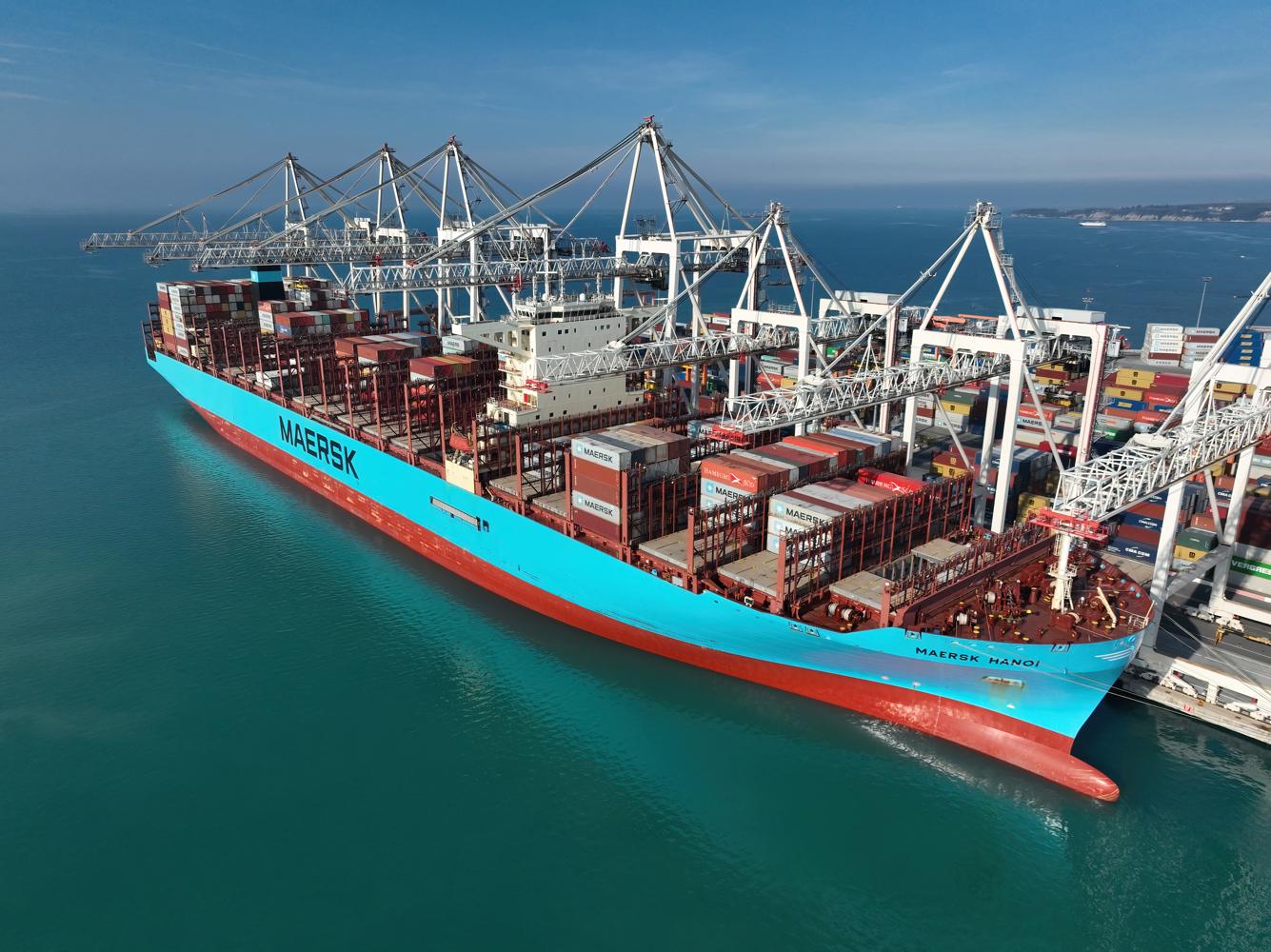
Port of Vancouver · resources out · manufactures in · ~$100B
China is Canada's second-largest trading partner, but the trade structure is asymmetric. Canadian exports are primarily resources, while imports cover all manufacturing categories. The "de-risking" discussion is reshaping this relationship.
Main Exports
- Canola - Canada's largest export to China, but has faced repeated market access issues
- Minerals - Iron ore, potash, copper, etc.
- Wood Products - Pulp, lumber products
- Agricultural Products - Pork, seafood, legumes
De-risking and Critical Minerals
The Canadian government is pushing to reduce China dependence in critical supply chains, especially in critical minerals. Canada has abundant lithium, cobalt, nickel, and other minerals needed for EV batteries, and the government hopes to attract Western investment to build domestic supply chains.
In 2022, Canada ordered three Chinese companies to divest from Canadian critical mineral firms, demonstrating a tough stance in this area.
Chinese Canadian Diaspora & Immigration

~1.7 million Chinese Canadians
~5% of Canada · Toronto · Vancouver · Montreal
Roughly 1.7 million Canadians have Chinese heritage, about 5% of the population. The community is one of the oldest immigrant groups in Canada and also one of the fastest-growing. It is both a living bridge to Asia and, uncomfortably, a focal point of foreign-interference concerns.
Historical waves
19th century: railway and the head tax 1880s-1923 · exclusion era
Thousands of Chinese workers helped build the Canadian Pacific Railway under brutal conditions. From 1885 Canada imposed a head tax, and from 1923 to 1947 the Chinese Immigration Act effectively banned Chinese immigration. Parliament issued a formal apology and symbolic redress in 2006.
1980s-90s: Hong Kong wave Pre-handover migration · Vancouver & Toronto
In the run-up to Hong Kong's 1997 handover, hundreds of thousands of Hong Kongers moved to Canada, many through business and investor programs. They transformed Vancouver, Richmond, and Toronto's suburbs and built deep commercial, cultural, and family ties to Hong Kong that remain today.
2000s: mainland China wave Skilled workers · students · investors
Since China's economic opening, mainland Chinese have arrived through skilled-worker programs, the study-to-immigration pathway, and investor streams. About 150,000 Chinese students study in Canada each year, making them one of the largest international student groups.
2021+: Hong Kong "lifeboat" pathway ~300,000 Canadian passport holders in HK
After the 2020 National Security Law, Canada launched a special open work permit and PR pathway for Hong Kong residents. Around 300,000 Canadian passport holders live in Hong Kong, one of the largest Canadian expatriate populations anywhere.
Geographic concentration
Chinese Canadians are concentrated in the Greater Toronto Area, Metro Vancouver, and Montreal, with significant communities in Calgary, Edmonton, and Ottawa. Vancouver's Chinese-Canadian population is proportionally the largest of any major North American city.
Bridge and fault line
The diaspora is a tremendous asset — cultural, commercial, linguistic — and the most important channel for honest information about China reaching Canadian institutions. It is also the community most affected by allegations of foreign interference, transnational repression, and the RCMP's investigations into overseas "police service stations." Canadian-born Chinese identity, generational dynamics, and Cantonese-Mandarin-Hokkien differences all matter and should not be collapsed into a single story.
Understanding Canadian Media
How Canadians hear about China
Globe and Mail · CBC · National Post · Toronto Star · think tanks
Canadian media plays an important role in shaping public opinion on China. Mainstream media coverage of China is generally negative, but different outlets have varying positions.
| Outlet | Type | China Coverage Characteristics |
|---|---|---|
| Globe and Mail | National newspaper | Deep investigative reporting, hawkish on China |
| CBC | Public broadcaster | Relatively balanced, focuses on human rights and diplomacy |
| National Post | Conservative outlet | Hawkish on China |
| Toronto Star | Liberal outlet | Focus on community impact and human rights |
Think Tanks and Research Institutions
The following institutions regularly publish China-related research that influences policy debates:
- Asia Pacific Foundation - Relatively neutral, focuses on economic relations
- Macdonald-Laurier Institute - Conservative think tank, hawkish on China
- Canadian International Council - Academic orientation, diverse perspectives
Media Literacy Tip
When reading Canadian China coverage, distinguish between news reporting and opinion pieces, understand different outlets' positions, and consult multiple sources to form judgments. This site aggregates signals from various sources to help readers gain a comprehensive perspective.
Key Terms Glossary
| Term | Chinese | Definition |
|---|---|---|
| Five Eyes | 五眼联盟 | US-UK-Canada-Australia-NZ intelligence sharing alliance |
| Foreign Interference | 外国干预 | Foreign government interference in Canadian domestic affairs |
| De-risking | 去风险 | Strategy to reduce supply chain dependence on specific countries |
| Two Michaels | 两个迈克尔 | Michael Kovrig and Michael Spavor, Canadian citizens detained in China 2018-2021 |
| Indo-Pacific Strategy | 印太战略 | Canada's 2022 Asia-Pacific regional strategy document |
| National Security Review | 国家安全审查 | Process to assess national security implications of foreign investments |
| Minority Government | 少数政府 | Government where ruling party lacks parliamentary majority |
| Confidence Vote | 信任投票 | Parliamentary vote on government confidence; failure leads to government fall |