Business & Markets

China market data, sector analysis, and Canada-China trade updates

China Market Indices

Shanghai Composite
3,880.10
-1.00%
Shenzhen Component
13,352.90
-0.99%
Hang Seng
25,116.53
-0.70%
CSI 300
4,440.79
-0.85%

Currency Rates

USD/CNY
6.8816
-0.0508%
CAD/CNY
4.9432
-0.0569%
USD/CAD
1.3921
+0.0266%

Market Signals

Trade Elevated April 6, 2026

Expanding Global Markets and Connecting International Circuits - A Series Commentary on Learning and Implementing President Xi's Important Remarks during the Two Sessions, Part II: Enhancing Economic Resilience

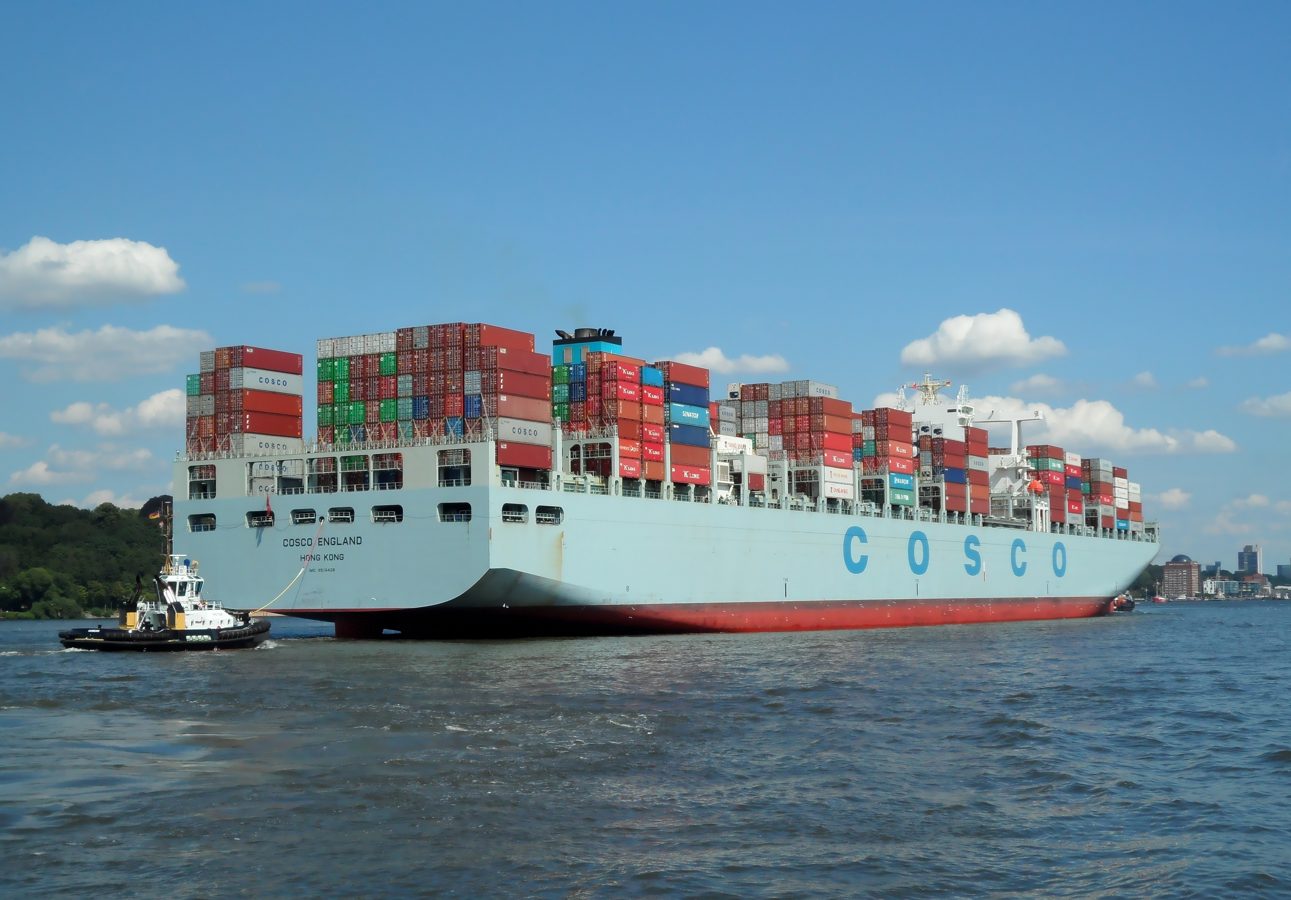
Beijing is doubling down on trade diversification as a structural policy response to external shocks — and the numbers behind the rhetoric are substantial. China's total goods trade hit 45.47 trillion yuan in 2025, up 41.1% versus 2020 and compounding at 7.1% annually, while services trade crossed 8 trillion yuan for the first time, gaining 7.4% year-on-year. Foreign direct investment inflows reached USD 174.38 billion in 2025, a 7.1% increase, keeping China's inbound FDI stock in the global top three for nine straight years. These figures frame the political directive issued at the Two Sessions: Xi Jinping, speaking directly to the Jiangsu delegation, called for 'broadly exploring global markets' and deepening connectivity with international supply and capital circuits — language that signals Beijing views export-market diversification not as opportunistic but as a core resilience mechanism. The policy transmission is clear: China is institutionalizing a multi-vector trade strategy that reduces dependence on any single bilateral corridor — a direct counter to tariff and sanctions pressure from Western economies. The 14th Five-Year Plan's opening-up scorecard is being used to legitimize acceleration into emerging markets across Southeast Asia, the Middle East, Africa, and Latin America. For commodity exporters and manufacturers embedded in China's supply chain, this means Beijing will actively court alternative sourcing partners and push state-backed enterprises to anchor new trade loops outside the transatlantic axis. The 'international circle' framing is not merely diplomatic posturing — it carries procurement, logistics, and capital allocation implications. Sectors where China is expanding market reach (green energy equipment, EVs, industrial machinery) will see intensified competition in third markets, while sectors supplying China (energy, base metals, agriculture) face potential demand re-routing as Beijing calibrates import sources to geopolitical alignment.

Technology Low

Calvin Chen reviews Hong Kong's economy for the first quarter of this year, noting active stock market trading and improvements in the real economy.

Hong Kong's Financial Secretary Calvin Chen flagged a resilient capital markets story for Q1, even as the Hang Seng Index slipped roughly 2% on Middle East-driven risk-off pressure. Average daily turnover in the first two months hit HK$260 billion — up 17% year-on-year — with March activity accelerating further as global uncertainty pushed capital toward Hong Kong as a perceived safe haven. The city's IPO pipeline was the standout: as of late March, Q1 fundraising had surpassed HK$103 billion, reclaiming the global number-one ranking for new listings. Chen framed this partly as a function of mainland economic momentum funneling deal flow into Hong Kong's listing platform. On the real economy side, both export performance and local consumer confidence registered sequential improvement in Q1, offering a modest but tangible offset to the weak index performance. Chen highlighted Hong Kong's role in financing AI and advanced manufacturing development — explicitly linking the city's 'financial +' strategy to Beijing's 'new productive forces' policy push. The city's ranking as a top-three global financial center, with scores trailing only New York and London, was cited as evidence that mainland backing continues to structurally underpin Hong Kong's market infrastructure, even when short-term sentiment wobbles under geopolitical stress.

Sector Breakdown

Hang Seng TECH ETF

Hang Seng TECH ETF
9.84
-1.30%

ChiNext Composite

ChiNext Composite
3,149.60
+0.00%

SSE 50

SSE 50
2,830.60
+0.00%

Shenzhen 100

Shenzhen 100
5,679.80
+0.00%

SPDR Gold Trust

SPDR Gold Trust
3,340.00
-1.56%

CSI 500

CSI 500
7,534.94
+0.00%

Top Movers

Gainers

Name Price (CNY) Change
ANTA Sports HK$80.55 +3.20%
Haidilao HK$14.82 +2.99%
PetroChina HK$10.77 +2.09%
ICBC HK$6.96 +1.16%
Bank of China HK$5.06 +1.00%

Losers

Name Price (CNY) Change
JD.com HK$111.90 -0.89%
Tencent Holdings HK$489.20 -1.49%
Meituan HK$80.25 -2.07%
Alibaba Group HK$118.50 -3.42%
SMIC HK$51.00 -3.50%

Regulatory Actions

Low

Electronic border management permit in China starting April 15

China's National Immigration Administration digitized its border management zone pass system effective April 15, replacing paper-issued permits with an electronic credential required for travel to restricted frontier regions including Xinjiang, Tibet, Yunnan, Guangxi, Inner Mongolia, and six additional border provinces. The policy shift is administrative in form but carries meaningful access implications: mainland Chinese residents aged 16 and above can self-serve through the government digital platform for passes valid up to three months, while a separate, more cumbersome in-person process applies to Hong Kong, Macao, and Taiwan residents, overseas Chinese, and foreign nationals — all of whom must apply directly at a county-level or above public security exit-entry bureau. Paper permits already issued remain valid through their expiry dates, softening the transition. The rule tightens the administrative perimeter around China's most geopolitically sensitive regions. Xinjiang and Tibet remain under elevated security protocols, and the formalization of a digital credentialing layer adds a trackable, data-linked layer to cross-border movement. For Taiwan residents specifically, the requirement to interface with mainland public security organs for a permit — even for family visits — reinforces the friction embedded in cross-strait civilian travel under current political conditions.

FDI & M&A Tracker

Major Chinese investments in Canada and Canadian investments in China

Company Sector Deal Size Status Regulatory Review
Sinomine Resource Group / Tanco Mine CN → CA Critical minerals (lithium, cesium) CAD 220M review Under enhanced national security review by ISED under the Investment Canada Act.
Zijin Mining / Solaris Resources stake CN → CA Copper mining CAD 130M blocked Withdrawn after ISED indicated the transaction would not pass net benefit and security tests.
Teck Resources / Jiangxi Copper offtake CA → CN Copper concentrate offtake USD 1.4B (5-yr supply) closed Commercial offtake agreement, no ICA review required.
BYD Canada manufacturing facility CN → CA EV battery assembly CAD 800M (proposed) announced Pre-filing discussions with ISED ongoing; subject to surtax regime and ICA national security screening.

Investment Screening & FIPA

Investment Canada Act, FIPA framework, and critical sectors under heightened review

2022
ICA tightening on critical minerals
2014
Canada-China FIPA in force
6+
Critical sectors under review

The Investment Canada Act (ICA) allows the federal government to review foreign investments that could harm national security. Since 2022, reviews of Chinese state-owned investments in critical minerals have been explicitly tightened. The Canada-China Foreign Investment Promotion and Protection Agreement (FIPA), in force since 2014, sets reciprocal investor protections but does not override national security review.

Sectors under heightened review

  • Critical minerals (lithium, cobalt, rare earths)
  • Advanced semiconductors
  • Artificial intelligence and quantum
  • Biotechnology and health data
  • Telecommunications and 5G
  • Aerospace and defence

Canada-China Trade

Reference: 2026-02-01
Total Imports from China
$6.3B CAD
Total Exports to China
$3.3B CAD
Trade Balance
$-3.1B CAD
Commodity Export Value (CAD) Import Value (CAD) Balance Trend
Electronic & Electrical Equipment $52M CAD $1.2B CAD $-1.2B CAD Decreasing
Consumer Goods $106M CAD $2.1B CAD $-2.0B CAD Decreasing
Industrial Machinery & Equipment $55M CAD $1.1B CAD $-1.1B CAD Decreasing
Metal & Mineral Products $135M CAD $454M CAD $-319M CAD Decreasing
Forestry & Building Materials $334M CAD $417M CAD $-83M CAD Increasing
Energy Products $1.1B CAD $39M CAD $1.0B CAD Increasing
Farm, Fishing & Food Products $471M CAD $70M CAD $400M CAD Increasing
Chemicals, Plastics & Rubber $124M CAD $413M CAD $-289M CAD Decreasing
Motor Vehicles & Parts $20M CAD $405M CAD $-385M CAD Stable