
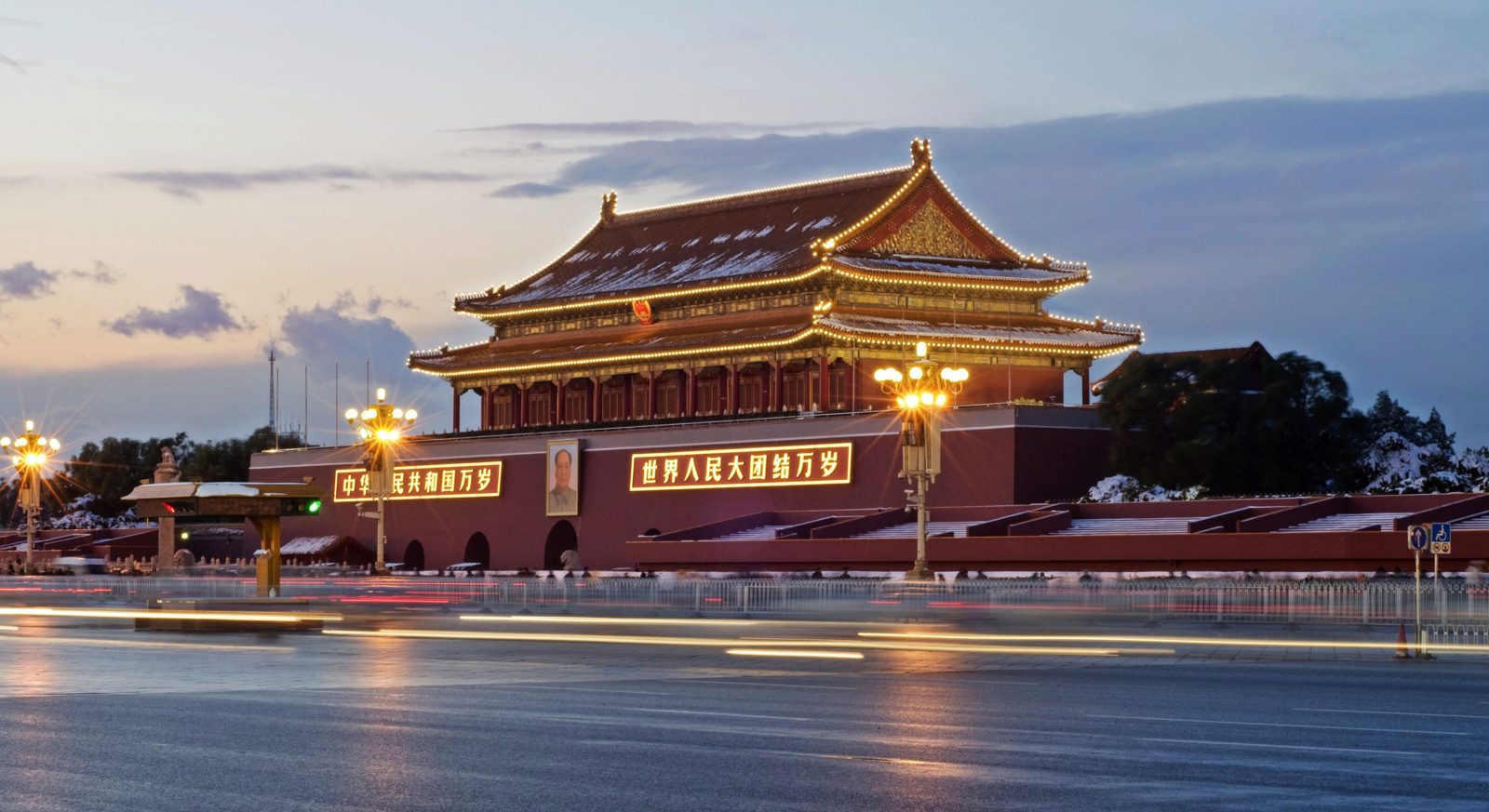
How China Actually Works
China is a single-party state where the Communist Party sits above and directs all government, military, and judicial bodies. There is no separation of powers in the Western sense.
Key concept
Party > State. The CCP directs all government, military, and judicial bodies. The General Secretary leads the party, and the party leads the country.
This is fundamentally different from Canada and other Western democracies. In Canada, the Prime Minister is constrained by Parliament, courts, and an independent press. In China, government ministries, provincial leaders, and military commanders all answer ultimately to party structures, not to the public through elections.
Understanding this dual structure, party sitting above and interpenetrating the state, is the single most important foundation for interpreting China's diplomatic signals, trade decisions, military postures, or the actions of Chinese state-linked companies operating in Canada.
Why it matters for Canada
Canada's diplomatic, trade, and security interactions with China are shaped by this party-state structure at every level. When Canadian officials negotiate with Chinese counterparts, they are engaging with people who operate within a chain of command that runs upward to the party, not to voters.
The Communist Party (CCP)
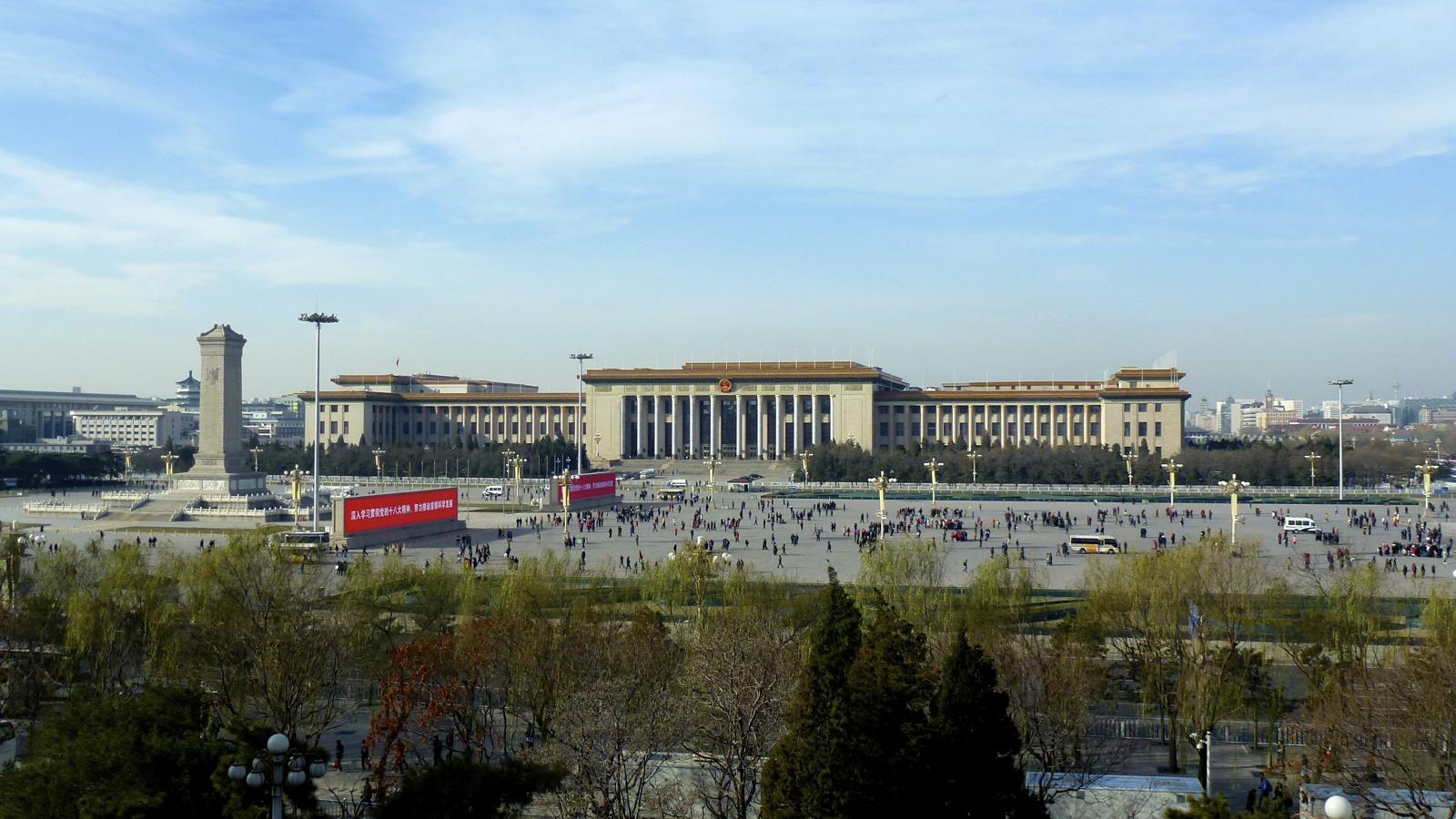
98 million members. One General Secretary.
中国共产党 · founded 1921 · in power since 1949
The CCP is the most powerful institution in China. Power concentrates sharply at the top of a pyramid, from 98 million members at the base to a single General Secretary at the apex.
At the apex sits the General Secretary (Xi Jinping since 2012), the most powerful person in China. This title matters more than the presidency, which is largely ceremonial. Xi also holds the titles of President and Chairman of the Central Military Commission, consolidating all three pillars of power. This level of concentration has not been seen since Mao Zedong.
The party controls all major personnel appointments through its Organization Department, managing the careers of roughly 70 million cadres. Promotion depends on party loyalty, factional connections, and, under Xi, demonstrated personal allegiance to the top leader.
Why it matters for Canada
The PSC's composition after each Party Congress signals China's policy direction for the next five years. When Xi stacked the 2022 PSC entirely with loyalists, it signalled that his priorities, self-reliance, national security, assertive foreign policy, would intensify. Personnel IS policy in China.
The Government (State Council)
The State Council
国务院 · executes party policy across 26 ministries
The State Council is China's cabinet. It implements party decisions through ministries. It does not set national direction; that comes from the party.
| Institution | Chinese | Function |
|---|---|---|
| NDRC | 发改委 | Economic planning, industrial policy, major project approvals |
| MOFCOM | 商务部 | Trade policy, tariffs, foreign investment, trade disputes |
| MFA | 外交部 | Diplomatic interface - communicates decisions, does not set foreign policy |
| MOF | 财政部 | Government revenue, fiscal policy, sovereign debt |
Under Xi, the State Council's autonomy has diminished significantly. The Premier today operates with considerably less latitude than predecessors like Zhu Rongji or Wen Jiabao. Policy direction comes from the PSC, from Leading Small Groups chaired by Xi, and from the Central Committee's plenary sessions.
Why it matters for Canada
When MOFCOM imposes tariffs on Canadian canola or launches an anti-dumping investigation, it is executing a decision that likely originated at the party level. The ministry is the messenger, not the decision-maker. Resolving trade disputes requires understanding where in the party hierarchy the decision was made.
The Legislature: NPC and CPPCC
China has a legislature, but it legitimizes rather than legislates. The NPC ratifies decisions already made by the party; the CPPCC is an advisory body with no legislative power.
| NPC (全国人大) | CPPCC (全国政协) | |
|---|---|---|
| Role | Legislature - ratifies laws, budgets, appointments | Advisory - united front work, policy consultation |
| Size | ~3,000 delegates | ~2,200 members |
| Meets | Annually in March (~2 weeks) | Annually in March (concurrent with NPC) |
| Real power | Limited - has never rejected major legislation | None - no legislative authority |
| Standing body | NPC Standing Committee (~175) - passes laws between sessions | CPPCC Standing Committee |
The NPC Standing Committee has been the vehicle for significant legislation including Hong Kong's national security law and revisions to China's espionage and data security laws, all with direct implications for Canadians operating in or with China.
The CPPCC's primary function is united front work, bringing non-CCP elites into the fold and channelling their advice to the party. Some CPPCC members have roles connecting mainland China with diaspora communities worldwide, making it relevant to Canada's foreign interference debate.
Party vs Government
Every level of government has a corresponding party structure that sits above it and controls it. The party secretary outranks the government head at every level.
The Rule
The party secretary outranks the government head at every level. Province: Party Secretary > Governor. City: Party Secretary > Mayor. Ministry: Party Committee > Minister.
Under Xi Jinping, the party side has been dramatically strengthened through party-led Leading Small Groups (now often called "commissions") that directly oversee policy areas previously managed by the government. Once the party makes a decision, the entire state apparatus moves in lockstep to implement it.
Why it matters for Canada
Always ask: was this a party-level decision or a bureaucratic one? Party-level decisions, like the detention of Michael Kovrig and Michael Spavor, are made at the highest levels and are extremely difficult to reverse through normal diplomatic channels. Bureaucratic decisions may be resolvable through standard government-to-government engagement.
Provincial and Local Governance
China's vast administrative geography is centrally controlled. Leaders are appointed, not elected, but local implementation can diverge significantly from central policy.
Provincial and local leaders are appointed by the center. The party's Organization Department manages a vast cadre rotation system, regularly moving leaders between provinces and central roles. This ensures loyalty to Beijing but means local leaders sometimes lack deep knowledge of the regions they govern.
Despite centralized appointment, local implementation can diverge significantly, captured in the phrase "the mountains are high and the emperor is far away" (山高皇帝远). A trade policy imposed by Beijing may be enthusiastically enforced in one province and quietly softened in another, depending on local economic realities. For Canadians doing business in China, conditions can vary dramatically from city to city.
The Military: PLA and the CMC
The People's Liberation Army
中国人民解放军 · the armed wing of the party, not a national army
The PLA is the armed wing of the Communist Party, not a national army. It exists to defend the party. The CMC reports to the party, not to the government.
| Branch | Chinese | Role |
|---|---|---|
| PLA Army | 陆军 | Ground forces - historically dominant, now slimmed in favour of other services |
| PLA Navy | 海军 | World's largest navy by vessel count. Central to South China Sea and Taiwan Strait |
| PLA Air Force | 空军 | Modernizing rapidly with stealth fighters and long-range strike capabilities |
| PLA Rocket Force | 火箭军 | Nuclear and conventional missile arsenal |
| PLA Strategic Support Force | 战略支援部队 | Space, cyber, electronic warfare, and information operations |
As Mao Zedong declared: "The party commands the gun; the gun must never command the party." Xi has waged a massive anti-corruption campaign within the PLA, simultaneously improving readiness and ensuring personal loyalty.
Why it matters for Canada
PLA activities, surveillance balloons, naval exercises near Taiwan, cyber operations targeting Canadian networks, reflect party strategic decisions, not independent military adventurism. There is no rogue general problem in China. Military signals are inherently political signals.
China's Economy
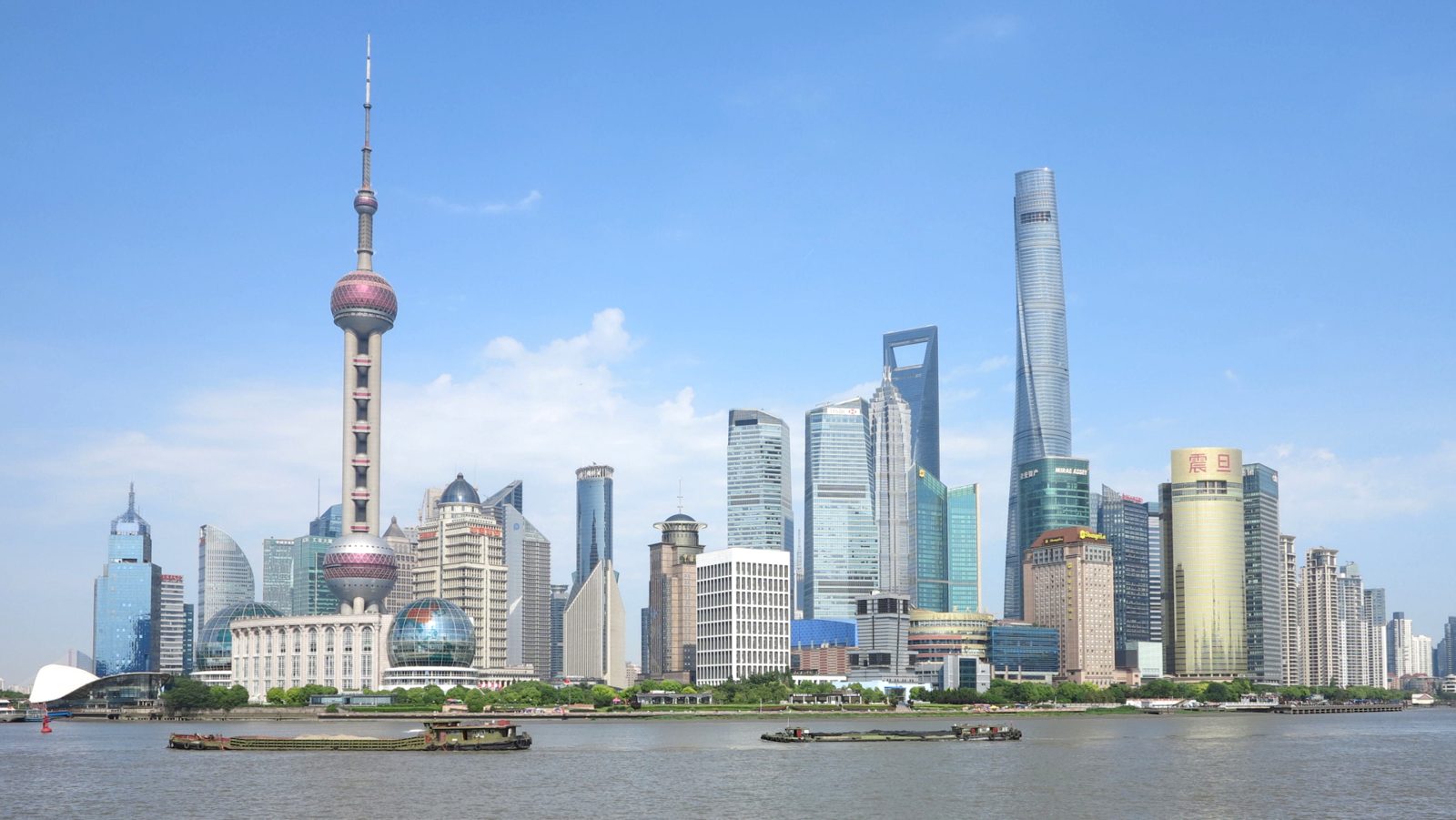
The world's second-largest economy
~$18T GDP · 1.4B consumers · state-led + private hybrid
China's economy is a hybrid: state-owned enterprises dominate strategic sectors, while private tech giants drive innovation. The Big Four banks anchor finance, four stock exchanges channel capital, and a still-unwinding property crisis shapes household sentiment.
GDP Structure
China's GDP is roughly: services (~53%), industry/manufacturing (~38% including construction), and agriculture (~7%). The trajectory has been gradual de-industrialization in share terms — but China remains the world's manufacturing workshop, producing about 30% of global manufacturing output.
State-Owned Enterprises (SOEs)
Roughly 100 central SOEs (央企) supervised by SASAC dominate strategic sectors: energy, telecom, finance, heavy industry, defense, and infrastructure. Top players by sector:
- Energy: Sinopec, PetroChina (CNPC), CNOOC, State Grid, China Southern Power Grid
- Telecom: China Mobile, China Telecom, China Unicom
- Finance: ICBC, China Construction Bank, Agricultural Bank of China, Bank of China
- Heavy industry: Sinochem, China Baowu Steel, COSCO Shipping, CRRC, AVIC
- Defense/Aerospace: CASC, CASIC, NORINCO, AVIC
Private Tech Giants
Despite the 2020-2022 anti-monopoly crackdown, private tech firms remain China's innovation engine:
- BAT: Baidu (search, AI), Alibaba (e-commerce, cloud), Tencent (WeChat, gaming, fintech)
- ByteDance: TikTok (Douyin in China), Toutiao news aggregator
- Huawei: Telecom equipment, smartphones, HarmonyOS, semiconductor design (HiSilicon)
- Pinduoduo / Temu: Discount e-commerce, aggressive overseas expansion
- Meituan: Food delivery, local services
- BYD & CATL: EV and battery world leaders
Banking System
The People's Bank of China (PBOC) is the central bank — sets monetary policy, manages the yuan, and oversees the financial system. The Big Four state commercial banks — ICBC, CCB, ABC, Bank of China — are among the world's largest by assets. The National Financial Regulatory Administration (NFRA), created in 2023, supervises banking and insurance, replacing the old CBIRC.
Stock Markets
- Shanghai Stock Exchange (SSE): Established 1990. Main board for large-cap and SOE listings.
- Shenzhen Stock Exchange (SZSE): Established 1990. Tech and growth-oriented, including ChiNext.
- Hong Kong Stock Exchange (HKEX): Gateway for international capital, dual listings, Stock Connect.
- STAR Market (科创板): Launched 2019 in Shanghai, China's NASDAQ-equivalent for hard tech.
- Beijing Stock Exchange: Launched 2021 for "specialized, refined, distinctive, innovative" SMEs.
Real Estate & the Property Crisis
Real estate once contributed up to 25-30% of GDP including upstream sectors. The 2021 "three red lines" policy triggered a deleveraging shock that bankrupted Evergrande and Country Garden, eroded household wealth (homes are 70%+ of household assets), and shook local government finances dependent on land sales. The 15th FYP doubles down on affordable housing and government-backed rentals as the "new model."
Canada Economic Ties
China is Canada's second-largest trading partner. Canada exports canola, wheat, peas, lumber, potash, coal, and seafood; imports machinery, electronics, EVs, and consumer goods. Two-way merchandise trade is roughly C$120 billion annually. FDI flows are now tightly screened under the Investment Canada Act, especially in critical minerals and tech.
Digital China
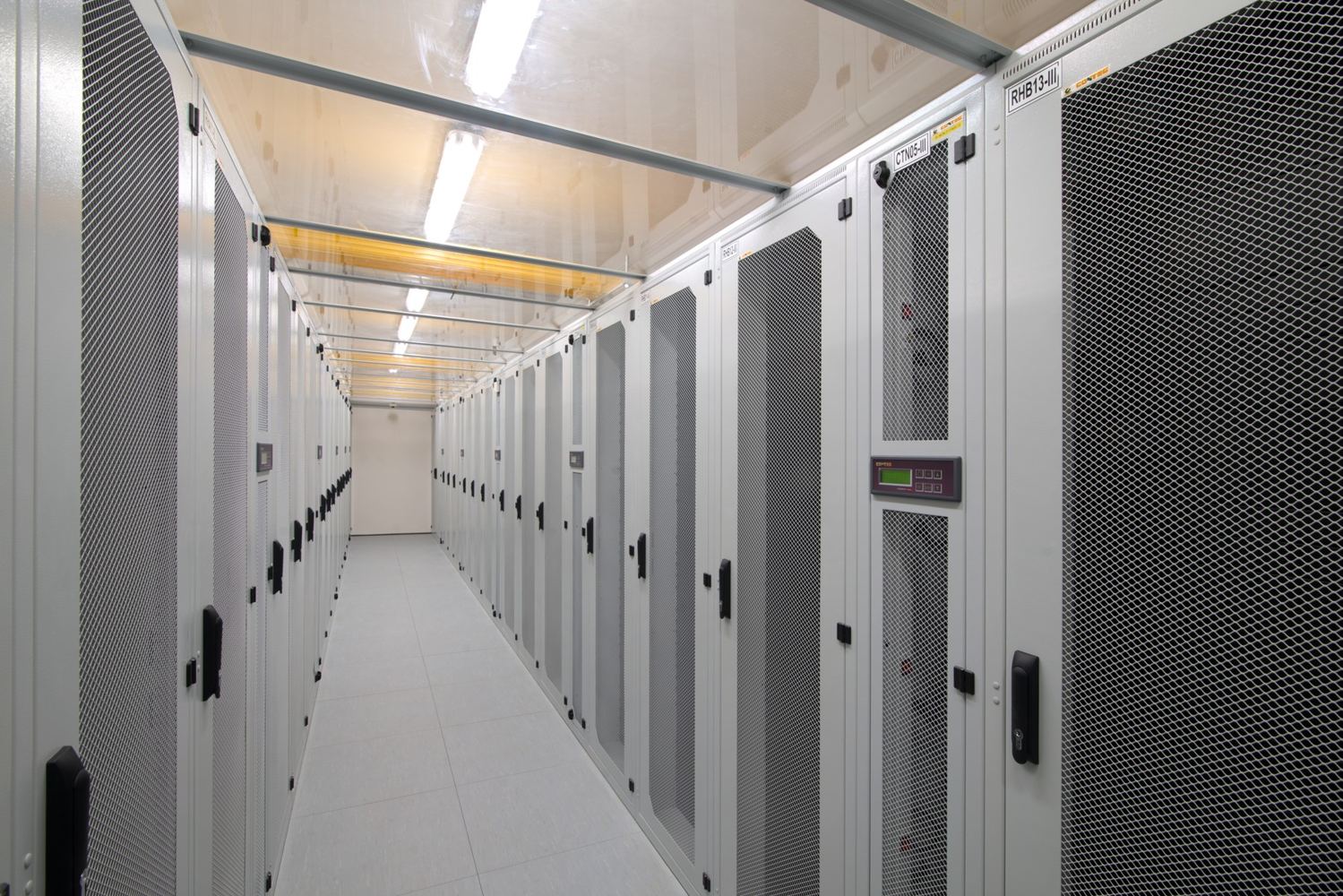
A parallel internet, by design
Great Firewall · social credit · WeChat super-apps · data sovereignty
China runs a parallel internet behind the Great Firewall, with its own super-apps, social platforms, and surveillance infrastructure. Three landmark data laws (CSL, DSL, PIPL) regulate data inside China, and a tighter party-tech relationship has emerged since the 2020 crackdowns.
The Great Firewall (防火长城)
The Great Firewall blocks Google, Facebook, Instagram, X/Twitter, YouTube, WhatsApp, most Western news sites, and many cloud services. VPNs are nominally illegal but widely used. The official rationale: "cyber sovereignty." The practical effect: a captive market for domestic platforms.
Social Credit System
Less monolithic than Western media often portrays. There are multiple systems: a financial credit-scoring layer (similar to FICO), a corporate compliance scoring system run by NDRC, blacklists for court-defying debtors (失信被执行人), and city-level pilots. There is no single "score." But the trajectory is toward integrated regulatory enforcement using digital records.
Surveillance Infrastructure
- CCTV networks: Roughly 540+ million cameras estimated nationwide.
- Facial recognition: Mandatory for SIM cards, train tickets, hotel check-ins.
- Skynet (天网) and Sharp Eyes (雪亮工程): Public-security camera grids extending into rural areas.
- Health code apps: Built during COVID, retained as a model for mobility-based regulation.
Chinese Internet Ecosystem
- WeChat (微信): Tencent's super-app — messaging, payments, mini-programs, news, government services. ~1.3B monthly users.
- Weibo (微博): Microblogging, the closest thing to public-square discourse, heavily moderated.
- Douyin (抖音): Domestic TikTok, with stricter content rules than the international version.
- Baidu: Search engine, AI (Ernie large language model), autonomous driving (Apollo).
- Xiaohongshu (小红书): Lifestyle and review app, surged internationally in 2025.
- Bilibili: Video-sharing for Gen Z, anime, gaming, education.
Data Sovereignty Laws
- Cybersecurity Law (CSL, 2017): Data localization for critical information infrastructure operators.
- Data Security Law (DSL, 2021): Classifies data by importance to national security; restricts cross-border transfers.
- Personal Information Protection Law (PIPL, 2021): China's GDPR analogue, with consent requirements and a data protection authority.
Tech-CCP Relationship
The 2020 Ant Group IPO suspension marked the beginning of an anti-monopoly crackdown — Alibaba, Tencent, Meituan, and others were fined billions and pushed to align with "common prosperity." The crackdown eased in 2023-2024 as the economy slowed; tech firms are now back in favor as engines of innovation, but operate under tighter party guidance. Many platforms host party committees internally.
Canada implications
TikTok scrutiny continues (Canada ordered ByteDance to wind down its Canadian offices in 2024 while the app stays available). Huawei and ZTE were excluded from Canadian 5G networks in 2022. PIPL affects any Canadian firm processing the data of Chinese residents. WeChat is the main Chinese-language information channel in Canada, raising questions about foreign interference and diaspora communications.
Taiwan & Hong Kong

Two flashpoints, one China policy
Taiwan Strait · One Country Two Systems · Canadian citizens at stake
Taiwan and Hong Kong are the two most sensitive issues in China's foreign relations and the most consequential for global semiconductors, regional security, and Canadian citizens abroad.
Taiwan
Taiwan (formally the Republic of China) has been self-governed since 1949 when the Kuomintang retreated there after losing the civil war. Beijing claims Taiwan as a province; Taiwan's democratically elected government rejects unification under "One Country Two Systems." Most countries, including Canada, recognize the PRC and acknowledge but do not endorse Beijing's position on Taiwan — the "One China Policy" is distinct from Beijing's "One China Principle."
- Semiconductor stakes: TSMC manufactures roughly 90% of the world's most advanced chips. Any Taiwan Strait disruption would dwarf the COVID supply shock.
- Military pressure: PLA aircraft and naval incursions across the median line of the Taiwan Strait have become routine since 2022. Major exercises followed Pelosi's 2022 visit and the 2024 Lai Ching-te inauguration.
- US arms sales: Continue under the Taiwan Relations Act, including F-16Vs, HIMARS, and anti-ship missiles.
- 2027 watch year: US assessments cite 2027 as the year by which Xi has reportedly ordered the PLA to be capable of taking Taiwan. Capability is not the same as intent.
Hong Kong
Hong Kong returned to Chinese sovereignty in 1997 under "One Country, Two Systems," with the Sino-British Joint Declaration promising 50 years of preserved freedoms. After mass protests in 2014 (Umbrella Movement) and 2019 (anti-extradition bill), Beijing imposed the National Security Law (NSL) in June 2020, criminalizing secession, subversion, terrorism, and collusion with foreign forces. In 2024, Hong Kong passed its own Article 23 national security legislation, broadening the scope further.
- Opposition trials: The "Hong Kong 47" trial concluded in late 2024 with prison sentences of up to 10 years for pro-democracy figures. Jimmy Lai's trial continued into 2025-2026.
- Press freedom: Apple Daily and Stand News closed; foreign media presence reduced.
- Capital and talent: Departures of professionals and businesses; Singapore and Dubai have absorbed much of the outflow.
Why Canada cares
Citizens: An estimated 300,000 Canadian passport holders live in Hong Kong; tens of thousands in Taiwan. Any contingency triggers an enormous consular and evacuation challenge.
Trade: Hong Kong is a major financial hub for Canadian firms operating in Asia. Taiwan is a top-15 trading partner and source of essential semiconductors used by Canadian tech and auto sectors.
Regional security: Canada's Indo-Pacific Strategy explicitly references Taiwan Strait stability. RCN frigates have transited the strait alongside US and allied vessels.
Recent developments to watch: PLA exercises around Taiwan, NSL prosecutions in Hong Kong, semiconductor export controls, and any change in Canadian government posture toward Taiwan visits.
Key Institutions for Canada Watchers
These institutions appear repeatedly in Canada-China news. Understanding what each does, and does not do, is essential for accurate analysis.
| Institution | Chinese | Function |
|---|---|---|
| MFA | 外交部 | Diplomatic interface - messenger, not policymaker |
| MOFCOM | 商务部 | Trade policy, tariffs, anti-dumping, foreign investment |
| UFWD | 统战部 | Overseas influence, diaspora engagement, united front work |
| MSS | 国安部 | Intelligence, counterintelligence, cyber operations |
| NDRC | 发改委 | Economic planning, industrial policy, Five-Year Plans |
| Taiwan Affairs Office | 国台办 | Cross-strait policy - most dangerous flashpoint in Asia-Pacific |
- MFA - Ministry of Foreign Affairs (外交部)
- China's primary diplomatic interface. Since ~2019, the MFA has adopted "wolf warrior diplomacy", combative language and social media pushback. However, the MFA is a messenger, not a policymaker. It communicates positions decided by party leadership and is considered relatively weak within China's bureaucratic hierarchy.
- MOFCOM - Ministry of Commerce (商务部)
- Handles trade policy, tariff decisions, foreign investment review, and trade remedies. MOFCOM administered restrictions on Canadian canola imports in 2019 and manages ongoing trade friction. Also oversees China's "unreliable entities list."
- UFWD - United Front Work Department (统战部)
- Manages the party's relationships with non-CCP groups domestically and overseas: diaspora communities, business elites, religious organizations. Central to Canada's foreign interference debate, with multiple reports identifying united front-linked organizations operating in Canadian cities.
- MSS - Ministry of State Security (国安部)
- China's primary intelligence agency, combining functions split in Canada between CSIS and the RCMP. Conducts espionage, counterintelligence, and cyber operations. Has been implicated in operations targeting Canadian political figures and technology companies.
- NDRC - National Development and Reform Commission (发改委)
- China's powerful economic planning body, sometimes called a "mini State Council." Sets industrial policy, manages price controls, approves major projects, and coordinates Five-Year Plans. Shapes China's demand for natural resources and technology self-sufficiency drive.
- Taiwan Affairs Office (国台办)
- Manages policy toward Taiwan. A military conflict over Taiwan would directly affect Canada through alliance commitments, economic exposure, and disruption of global semiconductor supply chains.
Decision-Making: How Policy Happens
The most consequential decisions are made behind closed doors within party structures. China watchers read signals, state media language, personnel changes, institutional statements, timing, to anticipate policy.
-
Party Deliberation
Issue identified within party bodies. Major issues begin at the General Secretary / PSC level.
-
Leading Small Groups
Powerful coordination bodies, often chaired by Xi, bring together party and government officials across agencies.
-
Politburo / PSC Approval
Major decisions discussed and approved at Politburo (monthly) or PSC (regular) level. Decisions carry highest authority.
-
State Council Translation
Party decisions translated into regulations, budgets, and directives to ministries.
-
Ministry & Local Execution
Individual ministries and provincial governments execute policy. The gap between central intent and local reality can be wide.
Reading the signals
State Media Language
Subtle changes in Xinhua or People's Daily phrasing signal major policy shifts. Vocabulary is chosen with extreme precision.
Personnel Changes
Who gets promoted, demoted, or purged reveals power dynamics and policy priorities.
Institutional Level
When the MFA speaks it may be routine. When the PSC issues a statement, it carries the party's full authority.
Timing
Decisions before a Party Congress carry different weight than after. Actions during sensitive anniversaries are loaded with meaning.
Five-Year Plan Archive: 15th FYP (2026-2030)
15th Five-Year Plan
十五五规划 · 2026-2030 · 109 major engineering projects
The 15th Five-Year Plan (十五五规划) is China's blueprint for 2026-2030, formally adopted in March 2026. It pivots from "building things" to "building capabilities" — innovation, self-reliance, common prosperity, and green transition. Use the drill-downs below to explore each priority domain, the 109 engineering projects, and what it all means for Canada.
Overview
The 15th Five-Year Plan Outline was formally adopted at the Fourth Session of the 14th National People's Congress in March 2026. Alongside it, the National Development Planning Law was passed on March 12, 2026 — the first law to codify China's planning system. 2026 is the "opening year" (开局之年) of the plan. Unlike previous plans focused on large infrastructure, the 15th FYP's 109 projects emphasize innovation and livelihoods over construction.
Six Priority Domains
Tap any domain below to drill into objectives, projects, timeline, and Canada implications.
Domain 1High-Quality Development 高质量发展 · New quality productive forces
Objectives: Shift from quantitative growth to innovation-driven development. The 109 major projects cluster around this theme — advanced manufacturing, digital economy, and frontier technology. Total factor productivity to grow ~4% annually.
Timeline: 2026-2030, with mid-term review at the Fourth Plenum (autumn 2028).
Advanced manufacturing & smart factories
Modernize 30,000 industrial parks with AI-enabled production lines. Target: high-end CNC machines, industrial robotics, aerospace components. Lead agencies: MIIT, NDRC.
Semiconductor self-sufficiency
Domestic fabrication of 14nm and below; mature-node global market share above 30%. Big Fund III deploys ~344B yuan toward equipment, EDA tools, and lithography. Companies to watch: SMIC, YMTC, Hua Hong, AMEC.
Digital economy core industries
Target: digital economy core industries to reach 10% of GDP by 2030. Includes data exchanges, computing infrastructure, industrial internet platforms.
Canada implications: Reduced demand for imported high-end machinery; potential displacement of Canadian advanced manufacturing exports; competition for global market share in clean tech and EV components.
Domain 2Tech Self-Reliance 科技自立自强 · AI, quantum, space, biotech
Objectives: Domestic innovation in semiconductors, AI, quantum computing, biotechnology, advanced materials. Reduce dependency on Western technology supply chains. R&D spending target ~3.6% of GDP.
Artificial intelligence
National AI computing clusters (East-Data-West-Compute, 东数西算). Domestic large language models (DeepSeek, Qwen, GLM, Baidu Ernie). AI chip alternatives to NVIDIA: Huawei Ascend, Cambricon, Biren.
Quantum technology
Quantum communication backbone (Beijing-Shanghai trunk line). Quantum computing milestones via USTC. Target: practical quantum advantage in optimization and cryptography by 2030.
Space technology
Tiangong space station expansion, Chang'e lunar program, Guowang and Qianfan megaconstellations (~26,000 satellites), deep space exploration to Mars and asteroid sample return.
Biotechnology
Synthetic biology, gene therapy, mRNA platforms, agricultural biotech (gene-edited soybeans and corn). Target: top-3 globally in biopharma originator IP.
Canada implications: Research collaboration restrictions tightening; talent flow concerns (CSIS warnings on academic transfer); export controls on Canadian quantum and AI hardware; opportunities in upstream materials (helium, rare earths, ultra-pure silicon).
Domain 3Common Prosperity 共同富裕 · Income, regional, rural
Objectives: Narrow income gap, regional development, rural revitalization. Build "Healthy China 2035." Strengthen pension and social safety nets.
Housing reforms
"Houses are for living, not for speculation" (房住不炒) entrenched. Affordable housing supply, government-subsidized rentals in mega-cities, defusing the property developer debt overhang (Evergrande, Country Garden legacies).
Education equity
"Double Reduction" policy continued: limits on for-profit tutoring and homework loads. Vocational education expansion. Rural teacher recruitment.
Healthcare access
Universal basic medical insurance deepening, rural clinics modernization, traditional Chinese medicine (TCM) integration, elderly care infrastructure for an aging population.
Canada implications: Demand for Canadian education services may soften; opportunities for senior care models, healthcare tech, and pension fund partnerships; closer scrutiny of high-net-worth Chinese capital flows.
Domain 4Dual Circulation 双循环 · Domestic demand + supply chain resilience
Objectives: Expand internal market as the main driver while maintaining international circulation. Build supply chain resilience in critical inputs.
Critical minerals
State stockpiling of lithium, cobalt, nickel, rare earths, gallium, germanium. Export controls tightened (gallium, graphite, antimony). Overseas mining acquisitions in DRC, Indonesia, Latin America.
Energy security
Strategic petroleum reserves doubled. LNG terminal buildout. Domestic shale and coalbed gas. Russia pipeline imports (Power of Siberia 1 and 2).
Food security
Grain self-sufficiency target ≥95%. Soybean import diversification. Domestic seed industry revitalization. Black soil protection in northeastern provinces.
Canada implications: Sustained but volatile demand for canola, wheat, peas, pork; critical mineral exports under both opportunity (demand) and risk (Chinese state competition); LNG Canada Phase 2 directly relevant; potash and uranium remain strategic.
Domain 5Green Transition 绿色发展 · Carbon neutrality 2060
Objectives: Peak carbon before 2030 (likely already peaked); carbon neutrality by 2060. Expand renewable capacity. Build the world's largest EV ecosystem.
Solar & wind
Installed renewables already surpass 1,200 GW. Target: 3,300 GW non-fossil by 2030. Curtailment reduction via UHV grid expansion. China makes 80%+ of global solar PV modules.
Hydrogen & storage
Green hydrogen pilot zones (Inner Mongolia, Xinjiang). Pumped hydro 120 GW target. Grid-scale battery storage with sodium-ion alternatives.
EV battery supply chain
CATL and BYD dominate global cell production. LFP chemistry leadership; solid-state push by 2027. NEV sales over 50% of new vehicles in 2025; target 60%+ by 2030.
Canada implications: Direct competition for cleantech market share (solar, wind, EVs); demand pull for Canadian critical minerals and uranium; EV tariff alignment with US (100% tariff) shapes auto sector; potential cooperation on CCUS and nuclear.
Domain 6National Security 国家安全 · Military, data, civil-military fusion
Objectives: Comprehensive national security: military, data, food, energy, biosecurity. PLA modernization milestone targets for 2027 (centenary of PLA) and 2035 (mechanization-informatization-intelligentization).
Defense spending
Official budget growing ~7% annually; actual spend likely higher. Naval expansion (3rd and 4th aircraft carriers), hypersonic weapons, Rocket Force restructuring after 2023 corruption purge.
Civil-military fusion (军民融合)
Dual-use research mandates across universities and SOEs. Private firms (drones, AI, semiconductors) integrated into PLA supply chains. The reason many Western export controls focus on end-use ambiguity.
Canada implications: Enhanced tech export controls (Canada aligns with US BIS lists); foreign investment screening of Chinese capital in critical minerals, telecom, biotech; research security guidelines for universities; CSIS counter-intelligence activity.
Major Engineering Projects (109 sample)
The plan includes 109 named major engineering projects across infrastructure, technology, energy, and defense. Drill into each category below.
Infrastructure (~30 projects)
- Sichuan-Tibet Railway (川藏铁路) — completion of remaining sections, world's most challenging mountain railway, 2030 target.
- Yarlung Tsangpo hydropower mega-dam — 60 GW capacity, three times Three Gorges, construction phase.
- National computing network (东数西算) — 8 hub clusters linking eastern data demand with western renewable power.
- UHV transmission corridors — additional ±1100 kV DC lines from Xinjiang and Inner Mongolia to coastal load centers.
- South-North Water Diversion Western Route — feasibility and pilot construction.
- Smart highway and high-speed rail extensions — pushing HSR network beyond 50,000 km.
Technology (~35 projects)
- Next-generation AI computing clusters and foundation model labs.
- 14nm and sub-14nm domestic semiconductor fabs (SMIC, YMTC, CXMT expansions).
- Quantum communication trunk lines and quantum computing facilities.
- 6G research and standard-setting initiative.
- Beidou satellite navigation upgrades and PNT services.
- Synthetic biology and biomanufacturing platforms.
Energy (~25 projects)
- Coastal nuclear new builds (Hualong One and CAP1400 reactors at 10+ sites).
- Offshore wind mega-bases in Guangdong, Fujian, Shandong.
- Desert/Gobi solar-plus-storage bases (450 GW pipeline).
- Strategic petroleum and gas reserves expansion.
- Pumped hydro storage stations (120 GW national target).
- Green hydrogen pilot zones in Inner Mongolia and Ningxia.
Defense & Strategic (~19 projects)
- Type 004 nuclear-powered aircraft carrier program.
- H-20 strategic stealth bomber.
- Hypersonic glide vehicle production lines.
- Space launch infrastructure (Wenchang expansion, commercial launch).
- Cybersecurity and information warfare capabilities.
- Civil defense and dual-use logistics hubs.
Historical Comparison: 14th vs 15th FYP
14th FYP (2021-2025)
- Theme: dual circulation, tech self-reliance begins
- GDP target: ~5.5% (informal)
- R&D / GDP target: 2.4%+
- Major engineering projects: 102
- Carbon peak by 2030 introduced
- Property crackdown era (Evergrande crisis)
- COVID Zero through 2022, reopening 2023
15th FYP (2026-2030)
- Theme: new quality productive forces, common prosperity
- GDP target: ~5%, with quality-over-quantity emphasis
- R&D / GDP target: ~3.6%
- Major engineering projects: 109
- Net-zero glide path to 2060
- Property stabilization, affordable housing pivot
- National Development Planning Law codifies the system
Canada Implications: Summary
For Canadian businesses: Sustained but selective demand for critical minerals, agricultural commodities, LNG, and uranium. Tighter market access for high-tech goods. Investment screening (Canada and China both) will gate new joint ventures. EV and battery sectors face direct Chinese competition.
For Canadian researchers: Heightened research security review on AI, quantum, biotech, materials, and aerospace collaborations. Talent flow scrutiny. Open science vs. national security tension growing.
For Canadian policymakers: 15th FYP shapes the agenda in trade (CUSMA alignment), technology (export controls), critical minerals (industrial strategy), climate (cleantech competition), and security (Indo-Pacific posture). Indo-Pacific Strategy implementation must read the FYP carefully.
Belt and Road Initiative: Evolution
Launched in 2013, the Belt and Road Initiative (一带一路) is China's global infrastructure and investment program. Originally focused on physical infrastructure (ports, railways, highways), BRI has evolved into "BRI 2.0" — a more diversified approach including the Digital Silk Road (5G, data centers), Health Silk Road, Green Silk Road, and third-party market cooperation. ~150 partner countries; key projects highlighted in the 15th FYP framework include the China-Europe Railway Express, China-Laos Railway, Port of Chancay (Peru), and Mombasa-Nairobi Railway. Increasingly led by private sector firms like CATL, Huawei, and Zijin Mining.
Glossary of Key Terms
| English Term | Chinese | Definition |
|---|---|---|
| CCP | 中国共产党 | Communist Party of China, ruling since 1949. ~98 million members. |
| NPC | 全国人民代表大会 | National People's Congress. ~3,000 delegates, meets annually in March. Ratifies rather than initiates legislation. |
| CPPCC | 中国人民政治协商会议 | Advisory body with united front function. No legislative power. |
| State Council | 国务院 | China's cabinet, led by the Premier. Implements party decisions. |
| PSC | 中央政治局常务委员会 | Top 7 leaders of the CCP. Supreme decision-making body. |
| CMC | 中央军事委员会 | Commands the PLA. Chaired by Xi Jinping. Reports to the party. |
| Two Sessions | 两会 | Annual concurrent NPC and CPPCC meetings in March. |
| Leading Small Group | 领导小组 | Powerful policy coordination bodies. Many upgraded to "commissions" under Xi. |
| United Front | 统一战线 | Strategy to co-opt non-party groups domestically and abroad. Relevant to Canada's foreign interference debate. |
| Wolf Warrior Diplomacy | 战狼外交 | Aggressive diplomatic style adopted since ~2019. Confrontational rhetoric and social media use. |